Pudacuo National Park
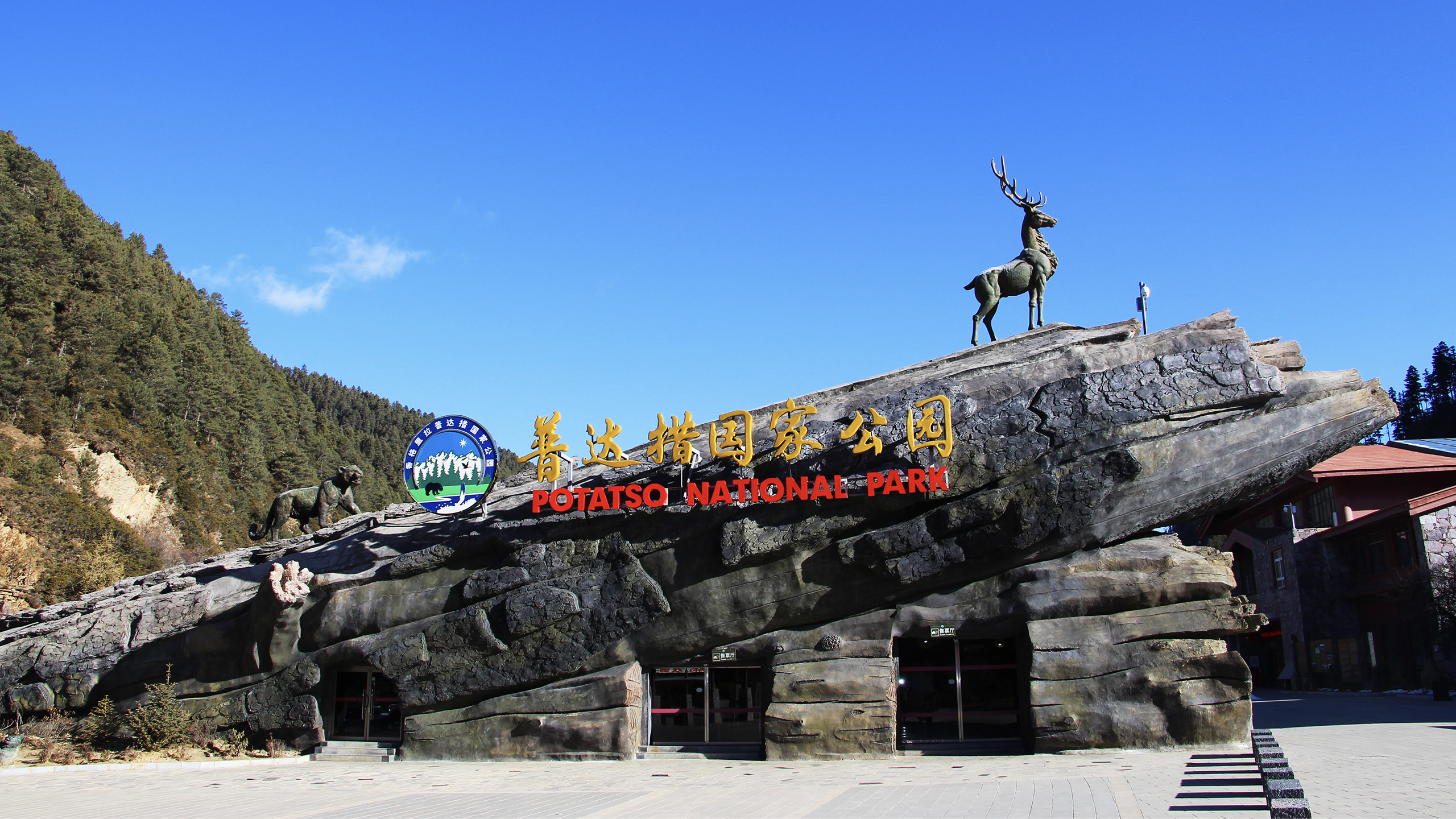
Pudacuo National Park is located in the central area of the "Three Parallel Rivers" World Natural Heritage in northwestern Yunnan. It consists of the Bita Sea Nature Reserve, an internationally important wetland, and the Shudu Lake Scenic Area of the Haba area of the "Three Parallel Rivers" World Natural Heritage. It is mainly composed of Shudu Lake, Milintang Yagao Mountain Pasture, and Bita Sea. It is also one of the main tourist attractions in Shangri-La. It is a provincial-level nature reserve and an important part of the "Three Parallel Rivers" scenic area.
The park was awarded the title of "National AAAAA Tourist Attraction" by the National Tourism Administration on November 26, 2012, becoming the "sixth in Yunnan Province and the first in the Kangba Tibetan area" national 5A-level tourist attraction. The park is 22 kilometers away from Shangri-La County, with geographical coordinates of 99°59′16″—100°02′38″ east longitude and 27°43′52″—27°58′30″ north latitude. Pudacuo National Park has rich plateau landscape resources such as geological landforms, lake wetlands, forest meadows, river valleys and streams, and rare animals and plants, and the original ecological environment is well preserved. At present, the area for tourists to recreate is 300 square kilometers.
The park is located in the subalpine cold-temperate coniferous forest vegetation zone in northwestern Yunnan, with the highest point at the top of Mili Tang North Mountain, 4159 meters above sea level; the lowest point is in Jinzigou in eastern Bita Sea, 3200 meters above sea level, with a relative height difference of 959 meters.
Pudacuo National Park is the first national park in mainland China. It is different from the tourist destinations we are familiar with, such as national forest parks, scenic spots, and world heritage sites. A national park is a protected area type and land use method that focuses on protection and takes into account recreation and environmental education. It is a place that embodies national will and enhances national pride. The world's first national park was Yellowstone National Park in the United States, first built in 1872. Since then, national parks have rapidly spread to many countries and regions around the world. Pudacuo is the first national park in mainland China established under the advanced technology and concepts in line with international standards. The park integrates environmental protection, ecological and cultural tourism, environmental education, and community benefit functions. Under the premise of protecting national and world natural heritage, it provides opportunities for sightseeing and tourism for all citizens and foreign tourists.
"Pudacuo" is a transliteration of Sanskrit, meaning "Boat Lake", which is the original Tibetan name of "Bita Sea". The earliest written record is in the biography of the tenth Karmapa Living Buddha (1604-1674), Choying Dorje. Page 50 of the book writes: The Dharma King traveled to the holy places and mountains under the jurisdiction of the Jiang people to visit and admire. On the edge of Jiantang, he discovered a lake called Puda with "eight virtues", which is like the characteristics of the Guanyin Pure Land (Potala) in Wei. This place is quiet and without noise, and the lake water is clear and refreshing. In the lake, there is a small island in the shape of a pearl-decorated mandala, surrounded by the waters of Pudacuo Lake, surrounded by infinitely beautiful meadows, dotted with various herbs and flowers. The mountains are densely forested with many tree species. It can be called the natural "Puda Holy Land" of Jiantang. The great achiever Karmapa Hsi (1204-1283) called it "Jiantang Puda, naturally formed". He also said: "Wei Di Potala is built by human power", while Jiantang Puda "is a natural manifestation".
The park's tourism resources are composed of natural ecological landscape resources and cultural landscape resources. Natural ecological landscape resources are divided into five parts: geological and geomorphological landscape resources, lake and wetland ecological tourism resources, forest and meadow ecological tourism resources, river valley and stream tourism resources, and rare animal and plant and ornamental plant resources. Cultural landscape resources are the Tibetan traditional culture that injects a living soul into the natural ecological landscape of Pudacuo National Park, including religious culture, agricultural and pastoral culture, folk customs, and building architecture. Pudacuo National Park is a pollution-free fairy tale world. The water and air quality meet the national Class I standards. The lake is clear, the sky is blue, the forest waves carry the sound of water, and the birds sing with the fragrance of flowers. It is the best pure land for self-cultivation and sentiment cultivation. This is a paradise for photography enthusiasts, with different scenery in all seasons.
Pudacuo National Park is an inland plateau ecosystem integrating cold-temperate primary dark coniferous forest vegetation, subalpine meadow, marsh meadow, and plateau lake vegetation. The park is rich in animal and plant resources. Among them, there are 2275 species of seed plants in 171 families and 568 genera. The rich species and their genetic diversity, and the diversity of ecological vegetation types, demonstrate the vigorous vitality of Pudacuo. Subalpine coniferous forest is the most important vegetation type in Pudacuo National Park: it is divided into four native forest communities: spruce, fir, large fruit red cedar, and alpine pine. There are as many as 1232 endemic species of seed plants in the park, accounting for 54.2% of the total number of 2275 species of seed plants in this area.
There are as many as 268 species of animals, including Zhongdian leaf-bearded fish (Schizothorax), black bear, clouded leopard, golden cat, red panda, otter, black-necked crane, blood pheasant, and gray crane. It is worth mentioning that the "Zhongdian leaf-bearded fish" is an ancient organism left over from the Quaternary glacial period, unique to the Bita Sea system, and there is only one species of Zhongdian leaf-bearded fish in Bita Sea. This phenomenon is also not found in lakes above 1 square kilometer in the country, and it has extremely high scientific research and market value. Bita Sea is also a wintering habitat for many migratory birds such as black-necked cranes and Chinese mergansers. It is rich in animal and plant resources and is an ideal base for scientific research and scientific investigation.
In Shangri-La Pudacuo National Park, there are crystal-clear alpine lakes, lush pastures, wetlands full of blooming flowers, and primeval forests frequented by birds and animals. Shudu Lake and Bita Sea, two beautiful alpine freshwater lakes, are known as "Alpine Fairies" and "Alpine Pearls". The lakes are rich in schizothorax and schizopygopsis fish. In autumn and winter, a large number of ducks and other birds play by the lake, creating a natural and interesting scene. Strolling on the pastures in the forest, the tinkling of horse bells and the smoke rising from the distant shepherd's huts blend harmoniously with the surrounding natural environment. Every summer, azaleas and many unknown wildflowers bloom in profusion, and birds come to join in the fun, making the scenic area full of birdsong and fragrance, which is intoxicating. The various trees in the primeval forest are in various shapes and full of wonders.
The scenic area has abundant rainfall and a pleasant climate. Sometimes the clouds and mists are ethereal, sometimes appearing and disappearing, like a fairyland, and sometimes the sea of clouds is vast, and being in it is like riding the clouds and driving the fog, which is full of fun. Such natural conditions make the plants grow luxuriantly and the vegetation is rich, which is like a natural botanical garden. In addition, there are many unique small scenes such as fault cliffs, small streams in the forest, and deep canyons, which are alternately distributed and have extremely high geographical scientific value and tourism value.
Pudacuo National Park will bring you not only visual satisfaction, but also a sense of relaxation and lingering. It is the best pure land for tourists to cultivate their minds and cultivate their sentiments.
The recreation areas in Pudacuo National Park mainly include:
I. Shudu Lake
"Shudu" is a Tibetan word meaning that cheese is as solid as a stone. The lakeside of Shudu Lake is rich in water and grass, which is especially suitable for grazing. Yaks produce high milk yield and good milk quality, and the cheese made is mellow and delicious. The word "Shudu" is intended to praise the fertility of the pasture.
Shudu Lake is the highest geological structural lake in Yunnan Province, with an altitude of 3595 meters, a length of 2.8 kilometers from east to west, a width of 0.7 kilometers from north to south, and an area of 120 hectares. A primitive fish lives in the lake. The fish is golden in color, scaleless, and has a natural crack in its abdomen, hence the name "Shudu Schizothorax". It has a history of 2.5 million years and has extremely high scientific research value.
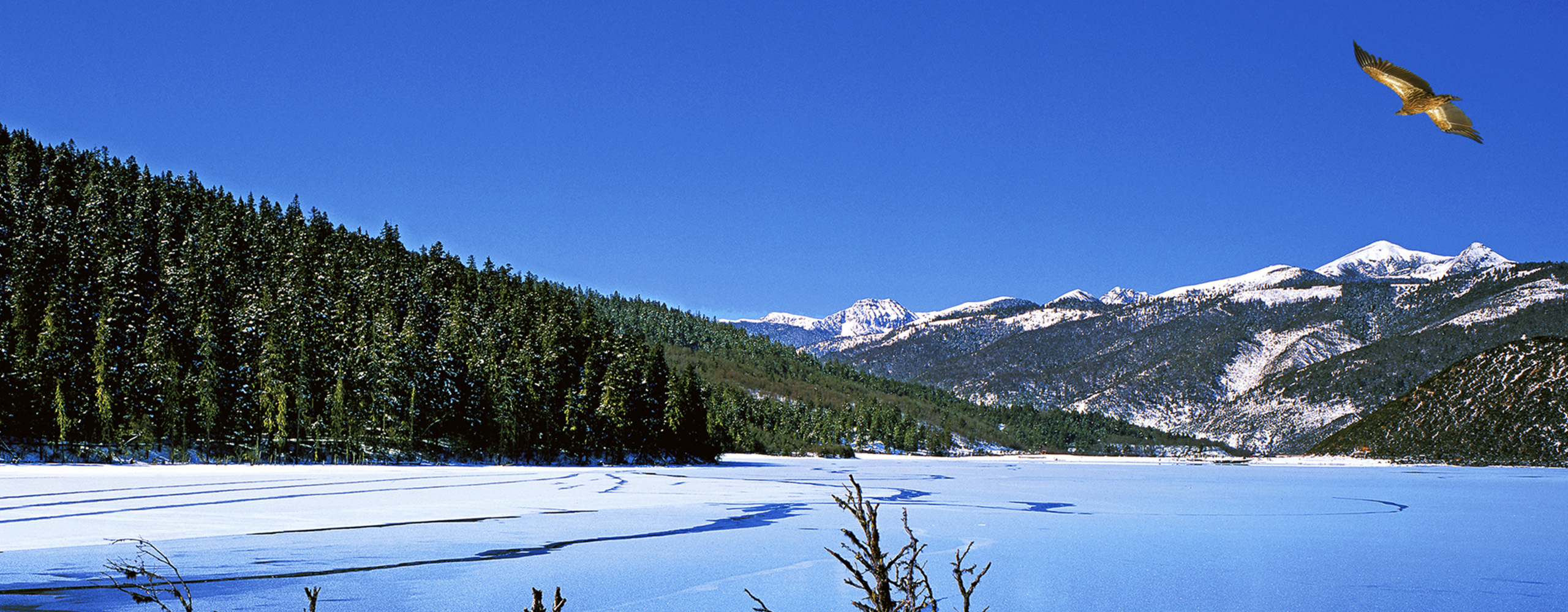
Shudu Lake is famous for its "morning mist reflection". Swimming in the mist is like a fairyland; in spring, Shudu Lake is surrounded by azaleas, which is particularly pleasant; in summer, the flowers are blooming, the pasture is lush, and the lake water is refreshing, away from the heat; in autumn, the colors are colorful and the forests are dyed; in winter, the snow is pure and boundless.
The scenery along the way to Shudu Lake is pleasant. Get in close contact with the primeval forest along the 3.3-kilometer wooden plank road, feel the joy and comfort of insects and birds chirping, get in close contact with the little squirrels, feel the cuteness and spirituality of wild animals, and personally experience the harmonious coexistence of man and nature; the natural oxygen bar takes you into a clear realm, and your thoughts fly freely; the colorful and distinct autumn scenery is an ideal home for photography enthusiasts and many film and television works. Many film and television works such as "The Promise", "Jade Goddess of Mercy", "Good Flowers and Full Moon", "The Sun Also Rises", "Princess Wencheng", "Breakup Buddies" and the Zhejiang version of "Journey to the West" have been filmed in Shudu Lake. The closing ceremony of the torch relay of the 2008 Beijing Olympic Games in Yunnan Province was held in Shudu Lake, and the wedding venue of Zhang Jie and Xie Na.
II. Milintang Yagao Mountain Pasture
"Milintang" is a Tibetan word meaning meadow in the shape of a Buddha's eye, named because it resembles a slender Buddha's eye. Milintang Yagao Mountain Pasture is 4.5 kilometers long from east to west, 0.5 kilometers wide from north to south, with a total area of about 240 hectares and an altitude of 3,700 meters. It is a famous Yagao Mountain Pasture in the history of Shangri-La. In summer, the pasture is a sea of flowers, with various wildflowers blooming in competition, which is called "Five-Flower Meadow" by the locals. It is also a wintering habitat for migratory birds such as black-necked cranes, gray cranes, and bar-headed geese.
The black-necked crane is a national first-class protected animal, with a graceful posture, a body length of 110-120 cm, and a weight of 4-6 kg. The whole body is gray-white, with long neck and legs. The bare area in front of the top of the head is dark red and sparsely covered with hair-like feathers. Except for a small white or gray-white spot behind and below the eyes, the rest of the head and the upper part of the neck are about 2/3 black, hence the name black-necked crane. It is the only crane species in the world that grows and breeds on the plateau, and it is a precious bird unique to China.
The small wooden houses scattered on the pasture are temporary residences for herdsmen when grazing, and also a window to understand the local Tibetan culture.
III. Bita Sea
Bita Sea is a fault structural lake, shaped like a treasure bottle, 3 kilometers long, 0.3 kilometers wide, 3538 meters above sea level, 40 meters average water depth, and 159 hectares in area. In Tibetan, "Bita" means a place where oak trees become felt. The water of Bita Sea is formed by the melting snow of snow-capped mountains and streams. There is a circular island in the lake, which is rich in vegetation species and is called "Plant Gene Bank" by botanists. There is a Buddhist temple on the island with a long history. Bita Sea is the most important part of Pudacuo National Park.
Around the Bita Sea Lake, there are ancient pines and oaks, covering the sky and the sun, surrounded by dark green mountains, like a green gem inlaid in the mountains. The lake water is clear and bright, shining brightly under the golden rays of the sun, which is wonderfully beautiful. The Bita Sea is integrated with the surrounding scenery, which can be described as "half lake of green mountains and half lake of water". Azaleas are gorgeous and bright around the lake, birds sing and flowers are fragrant on the lakeside, and fish swim in the shallow beaches. Looking out from the sea of azaleas, on the vast meadow, herds of cattle and sheep leisurely wander on the meadow dotted with flowers, and the lake and the meadow complement each other.
A primitive fish lives in Bita Sea. After biological research, it is a living fossil of ancient organisms left over from the Quaternary Glacier period. It is called "Bita Schizopygopsis" because it has two layers on its upper lip, also known as "Zhongdian Lefish". Every May of the lunar calendar is the season when azaleas bloom in Bita Sea. Whenever a breeze blows, azalea petals fall on the lake, attracting fish in the lake. After the fish swallow the petals, they get drunk and float on the water. The drunken fish and azaleas form a unique landscape. It is said that the old bear in the forest will also come to fish for the drunken fish by moonlight. The famous writer Feng Mu once described this scene, and since then, the landscape of "azaleas drunk fish" and "old bear fishing" in Bita Sea has become famous in the world. The unique water, the unique flowers, and the unique animals condense these two unique wonders. Strolling on the wooden plank road by the Bita Sea Lake, you can exclusively enjoy the lake, mountains, ancient pines and oaks, and mountain flowers in full bloom, which is intoxicating.
In the scenery of Bita Sea and its surroundings, you can see the natural presentation of the auspicious eight auspicious signs in Tibetan Buddhism. Bita Sea is a sacred place where the auspicious eight auspicious signs of Tibetan Buddhism are naturally manifested. It is not only picturesque, but also has boundless Buddha's grace.
Pudacuo National Park
It consists of the Bita Sea Nature Reserve, an internationally important wetland, and the Shudu Lake Scenic Area of the Haba area of the "Three Parallel Rivers" World Natural Heritage. It is mainly composed of Shudu Lake, Milintang Yagao Mountain Pasture, and Bita Sea.





Online Message
If you have any suggestions, please leave a message again, and we will contact you as soon as possible!
Friendship Links
Shangri La - China丨Shangri La News Network丨Yunnan Information Port
Copyright: Pudacuo Tourism Industry Branch of Diqing Tourism Group Co., Ltd