
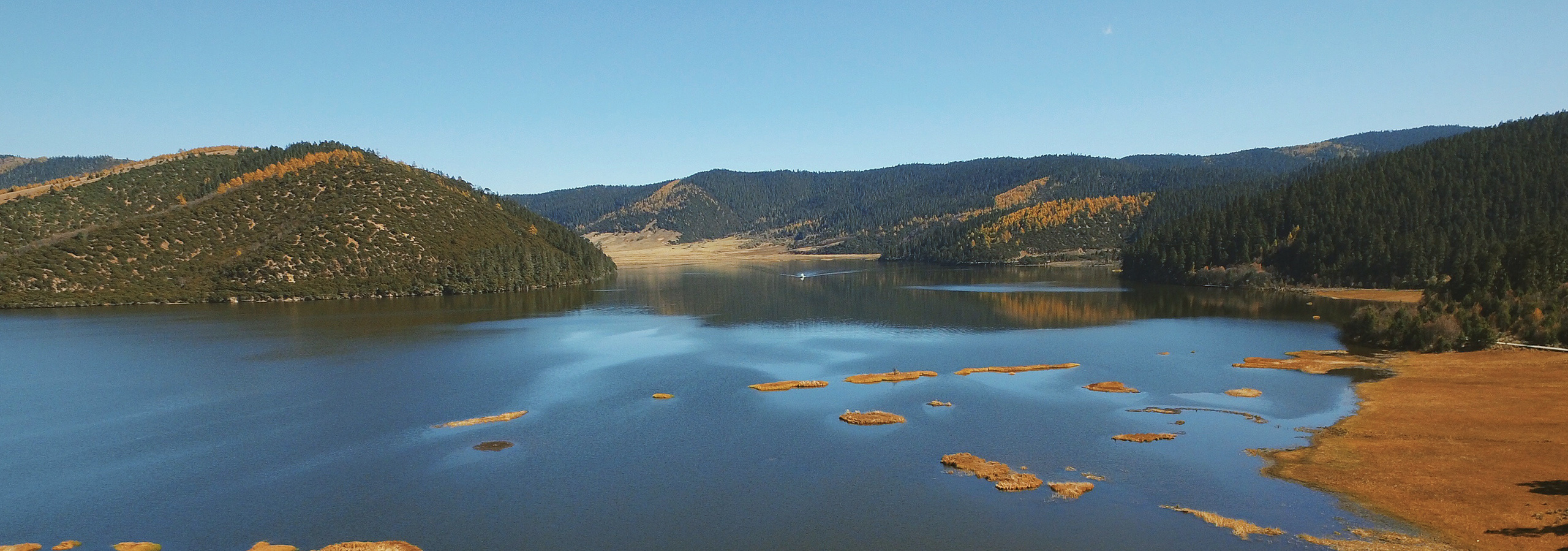
Travelogue - An Encounter with Pudacuo and Zhuoma
2025-06-12
Having just finished the college entrance exam, some of my friends and I decided to take an impromptu trip, and that's how we ended up at Pudacuo National Park.
Pudacuo National Park is located in Shangri-La County, Yunnan. It was established in 2007, marking the first step in China's nature conservation efforts and serving as a prelude to the ambitious national park plan. Tourism is a key factor in Pudacuo's development. Situated in the southwestern mountains of China, the park is part of the Three Parallel Rivers of Yunnan Protected Areas, a UNESCO World Heritage Site and one of China's most popular tourist destinations. It provides economic benefits to local communities through park-related jobs and ecotourism.
We were greeted by a Tibetan girl, a local guide from Shangri-La. Her Tibetan name is 'Drolma'. 21-year-old Drolma grew up in Shangri-La. 'Drolma' means fairy in Tibetan. She is good at singing and dancing and speaks fluent Mandarin. Drolma also sang us a Tibetan folk song, which depicted the beautiful scenery of Pudacuo National Park. 'Good morning, everyone! Welcome to the mysterious Shangri-La, the beautiful Pudacuo National Park. I am Drolma, your guide in the park. I hope you have a pleasant trip in the park.' Pudacuo National Park is located in one of the most biodiverse regions in the world. This region, which includes only 0.7% of China's land area, contains more than 20% of the country's plant species, about 1/3 of the mammals and birds, and almost 100% of the endangered species. By any measure, Pudacuo is a natural wonderland. It contains fish species unique and not found anywhere else in the world, rare and beautiful orchids, black-necked cranes, and yew species whose extracts are indispensable for multiple anti-cancer drug innovations. The park's name 'Pudacuo' comes from a local Tibetan word, which seems to provide divine help for tourists' safety when traveling in the area of scattered lakes. The expanding wetland area closely surrounds the mountains. Among the park's many lakes, the most important are Bita Lake and Shudu Lake, with lush meadows in the valleys and abundant rare plant and animal species. As major attractions, these two lakes are Drolma's favorites. Two years after graduating from a tourism vocational school, she became a professional guide for a local tourism company. She says she loves her job because she not only gets to show everyone the beautiful scenery of Shangri-La but also makes friends with tourists from all over the world. 'Every day is a new day. I find it very interesting to meet new friends and learn new things.' Drolma is lively, cheerful, and helpful. She is also always eager to learn. When people ask her about things she doesn't know, she always finds the answers after work. Drolma explained that traces of human existence in this area can be traced back to the Western Zhou Dynasty more than three thousand years ago. In the following hundreds of years, this area has been home to several tribes. Finally, in the Han Dynasty two thousand years ago, Shangri-La became known to the Central Plains. Today, the number of Tibetan people living in this town is greater than that of the Han people, so Tibetan architectural styles and customs can be seen everywhere. Most of the 130,000 people in Shangri-La also celebrate the New Year according to the Tibetan calendar. As a Tibetan Buddhist, Drolma is a believer in the local lamas. During the off-season for tourism, she also goes home to help her parents take care of the farmland. She is happy to be able to earn money and help support her family. 'Our family has one hectare of land. My parents work very hard in the fields. I hope that with my help, they can live better.' For her parents, Drolma is truly a joy; and for her colleagues, she is also a great partner. Shen Xueshu, who is from the Yi ethnic group, has known Drolma for two years: 'She is a responsible employee and a good friend. She is very smart, and her cheerful nature inspires almost everyone—including her tourists and those who work with her.' The average altitude of Shangri-La is about 3,300 meters, with a humid climate year-round, large temperature differences between day and night, and distinct seasons. Shangri-La's winters are cold and often snowy, while summers are rainy. Drolma believes that the best seasons to visit are spring and autumn, especially from May to July and from September to October. 'Magnificent scenery can nourish the soul, and brilliant culture can cultivate the mind. We hope everyone can have a pleasant time in Shangri-La.' Drolma also hopes that as tourism continues to grow, Shangri-La's economy can continue to develop rapidly.
Travelogue Introduction: This trip to Pudacuo National Park, the people and scenery along the way will be unforgettable for me. I hope Pudacuo gets better and better, and Shangri-La gets better and better.
Previous Page:

Pudacuo National Park
It consists of the Bita Sea Nature Reserve, an internationally important wetland, and the Shudu Lake Scenic Area of the Haba area of the "Three Parallel Rivers" World Natural Heritage. It is mainly composed of Shudu Lake, Milintang Yagao Mountain Pasture, and Bita Sea.





Online Message
If you have any suggestions, please leave a message again, and we will contact you as soon as possible!
Friendship Links
Shangri La - China丨Shangri La News Network丨Yunnan Information Port
Copyright: Pudacuo Tourism Industry Branch of Diqing Tourism Group Co., Ltd